
The Workbench in Between: Inside the Org, and Outside It
9/9/2026
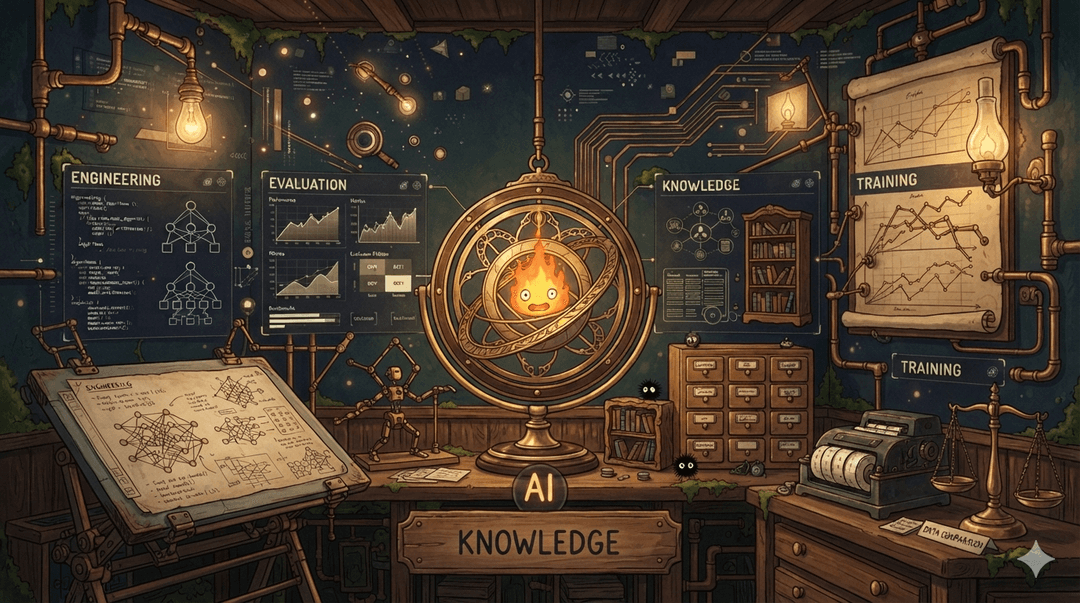
The last two pieces described two very different shelves. One is institutional — slow, visible, and built for accountability. The other is personal — fast, adaptive, and mostly invisible to anyone but the person keeping it. This piece is about the thing sitting between them: a workbench, not another AI model, built to move knowledge from one shelf to the other without losing what made it trustworthy on either side.
Not another model — a bench to work on
It's tempting to think the answer to "which AI should we use" is picking the right model. It isn't, really. Organizations already have access to OpenAI, Claude, Gemini, Grok, DeepSeek, local models, and more — the problem was never a shortage of models. The problem is that different teams end up using different tools, different source material, and different definitions of "good," with no shared way to compare the results or learn from what worked.
KB Sandbox is built to sit underneath all of that, model-agnostic on purpose: same problem, same evidence, controlled methods, comparable results. It's a workbench, not a competitor to any model or no code app builder tool — the point isn't to pick a favorite AI, it's to give whichever AI you use a shared place to work from, and a record of what it actually did.
Five simple moves
Underneath the workbench is a simple sequence: Knowledge → Intelligence → Engineering → Governance → Learning.
- Knowledge — gather the source material worth trusting: documents, policies, code, prior findings.
- Intelligence — turn that material into something usable, through curation and a human-reviewed wiki, not a raw document dump.
- Engineering — actually do the work: analysis, retrieval, comparing approaches, investigating a system, drafting a plan,building an agent or a workflow
- Governance — check the results against evidence, keep a record of where they came from, and keep a human in the loop on anything that matters.
- Learning — hold onto what was found so the next project doesn't start from zero.
None of these steps exist to cut people out. The point is the opposite: give the people doing the work a better bench to do it on.
What that looks like in practice
Say a product owner asks for a small-sounding feature: "let an administrator retry only the patients who didn't respond in a completed campaign." The instinct is to hand that straight to an AI coding tool and let it figure it out. The workbench asks a few questions first — how are results represented, what counts as a failure, could this accidentally contact someone twice, what existing capability can be reused — before anything gets built. What comes out the other side is a small, evidence-backed plan an engineer can implement anywhere: Claude Code, an IDE, whatever they already use. The workbench doesn't replace that step. It just makes sure the plan going into it is grounded in something real instead of a guess dressed up as confidence.
Two ways in, inside the organization
Inside an organization, the workbench shows up as two connected experiences rather than one screen. Most people only ever need the everyday one: ask a question, find approved information, prepare a document, pick up where a project left off — grounded in whatever knowledge that project actually permits. That's the equivalent of using the personal bookcase, except the shelf it's pulling from now belongs to the team, not just the individual.
Behind that sits the other experience — building and maintaining the knowledge itself, comparing approaches, defining a repeatable Method, evaluating whether an agent actually holds up, and keeping the human decision points that matter. That work usually falls to a Curator — often a department head or a trusted assistant, someone who already knows the team and what they're actually trying to get done. Their job isn't managing documents for their own sake; it's turning what the department already knows into something the rest of the team can reliably use. That's the Curator playing the same role a good librarian or archivist has always played — except now the shelf updates continuously instead of once a year.
The other bridge: builders serving their own customers
There's a second, separate gap this workbench sits in, and it has nothing to do with roles inside one organization. Plenty of the people building AI capability today aren't employees of the company they're building it for — they're solo builders or small software agencies, delivering work to their own clients.
This is worth distinguishing clearly, because it's easy to mistake for something it isn't. A new wave of "vibe coding" tools will turn a chat prompt straight into a deployed app, explicitly selling the idea that you don't need a developer at all. That's a different job entirely. A builder using this workbench isn't skipping the engineering — they're doing the discovery, the requirements, the evidence-gathering, and the specification before a line of code gets written, then building in their own IDE, their own repository, with whatever coding assistant they already prefer or farming it out to a recognized software dev house. The workbench doesn't write the application. It makes sure the plan going into the build is grounded in something real.
That middle ground is worth having, because it's being squeezed from both directions at once. Low-cost app builders are absorbing the simplest jobs from below — the ones a client can now describe in a prompt instead of commissioning. Large AI vendors are pushing broad, pre-built agents into enterprise accounts from above, on standardized work that doesn't need local knowledge. What's left in between is exactly the work that depends on knowing a specific business's processes, systems, and regulatory context — the kind of judgment a generic prompt or a distant vendor's agent can't replicate. A solo builder or a small agency who already has that local knowledge is in a strong position to do this work; they just haven't always had a governed place to do it.
The output stays portable, too — it doesn't have to run through any one interface. A finished capability can be delivered through the customer's existing application, a builder's own product, a plain web page, or another AI platform entirely. What stays behind, either way, is the record: the requirements, the evidence, the tests, the versions, and who approved what. The builder keeps their freedom to deliver however fits the customer best; the workbench keeps the trail that makes the delivered thing defensible later.
Why this closes the loop
Knowledge starts as noise. A person organizes it their own way, pushes it forward through curiosity, adaptation, and argument, and eventually it's worth more to more people than it was to just them. Somewhere in between, it needs a place to be checked, governed, and remembered — without losing the personal spark that made it worth sharing in the first place. That's the gap this workbench is built to sit in, whether the bridge being crossed is from one employee's Ember conversation to a Curator's approved knowledge base, or from a builder's own investigation to a capability their customer can actually trust.
Try and see for yourself. Kbsandbox.tech and reach out for a free trial.